
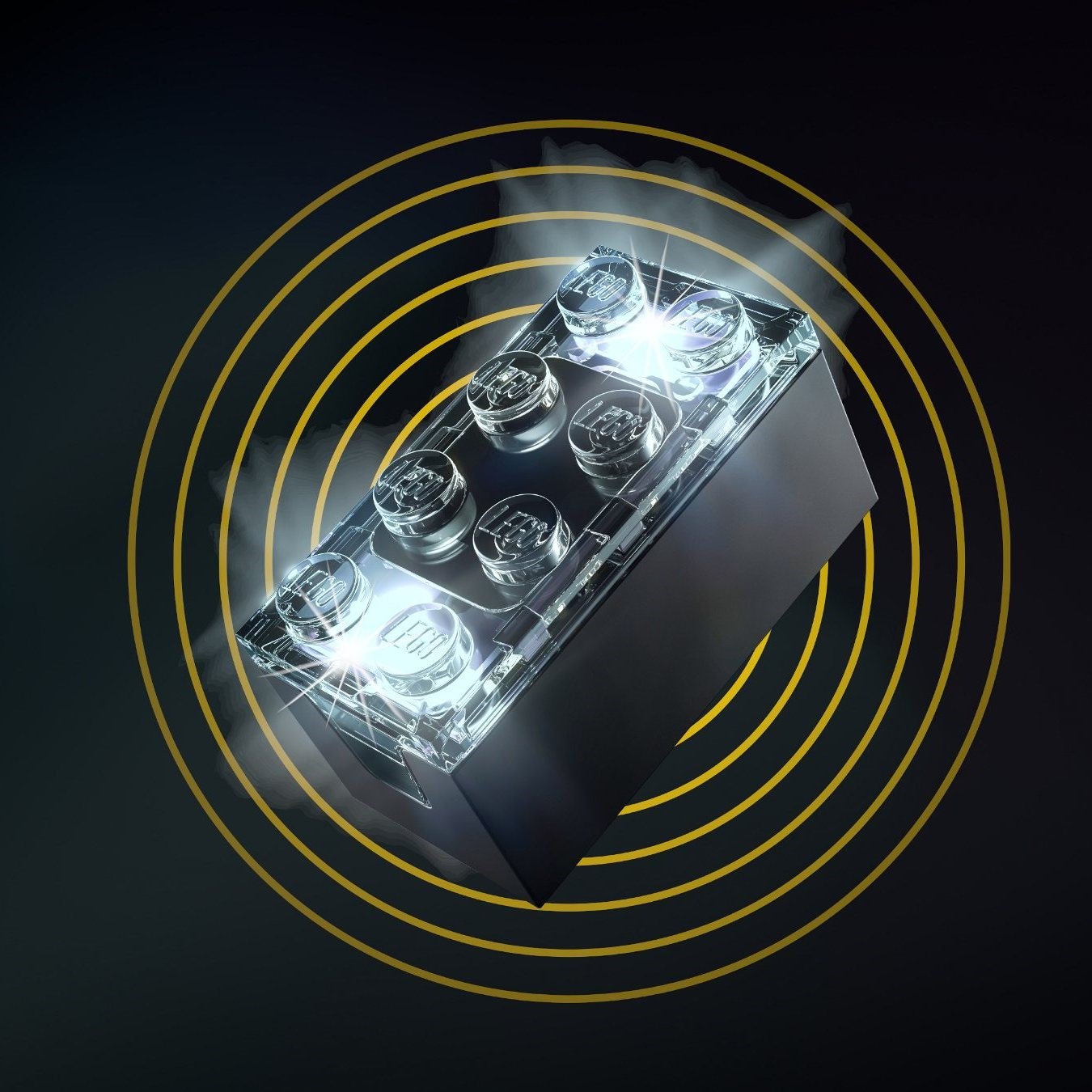
LEGO just dropped what it's calling its most significant innovation since the minifigure debuted in 1978. The SMART Brick is a 2x4 brick stuffed with a custom chip, accelerometers, LEDs, and a tiny synthesizer-driven speaker. Pair it with SMART Tags and SMART Minifigures, and your builds react to movement, orientation, and proximity with lights and sounds. No screens, no apps required for play.
It's genuinely impressive engineering. The chip is smaller than a single stud. The bricks wirelessly charge. They communicate with each other via a proprietary Bluetooth mesh called BrickNet. There are 25 patents involved.
And yet, the AFOL community has greeted it with something between a skeptical shrug and outright hostility. Which raises an uncomfortable question: does our opinion actually matter here?
The Star Wars Problem
The system launches March 1st with three Star Wars sets: Darth Vader's TIE Fighter (473 pieces, $70), Luke's Red Five X-Wing (584 pieces, $100), and Throne Room Duel & A-Wing (962 pieces, $160). More sets are teased, including a Mos Eisley Cantina, Millennium Falcon, and Landspeeder.
The sets themselves are... fine. They're clearly aimed at playability over display, with chunky proportions and action-oriented builds. Sit Palpatine on his throne and the Imperial March plays. Whoosh the X-Wing around and you get engine sounds. Lightsabers hum when Luke and Vader duel.
Here's where it gets awkward: the sounds are synthesized in real-time, not pre-recorded clips. This means no licensed audio. The lightsaber hum is approximate. The TIE Fighter screech is a suggestion. And in one particularly brutal demonstration video from CES, the Mos Eisley Cantina plays music that is very much not the Cantina Band song we all know. It's some vaguely jazzy noodling that sounds like it came from a royalty-free library for educational software.
How do you make a Star Wars cantina set that doesn't play one of the most recognizable pieces of Star Wars music? That's a genuine head-scratcher, and it's surprised me that Lucasfilm apparently signed off on it.
The synthesized minifigure "dialogue" hasn't impressed either—characters emit what Brickset charitably described as "robot noises" rather than anything resembling speech. It's closer to Simlish if Simlish had given up halfway through.
AFOLs: Not the Target Audience
The backlash has been predictable and, let's be honest, kind of beside the point.
Play experts have worried that sounds and lights will limit children's imagination. Longtime fans have complained about the premium pricing. Forum commenters have wondered if LEGO has "completely lost its mind." One Brickset user's comment captured the vibe perfectly: wondering whether the company is trapped in some kind of "groupthink wilderness."
But here's the thing LEGO keeps pointing out, and it's worth actually hearing: these sets are not for us.
LEGO spent eight years developing SMART Play. They started research back in 2017, and they did something they're famous for—extensive focus group testing with actual children. What they found is interesting: when battle and story features were heavily scripted, kids enjoyed them briefly. When LEGO stripped back the scripting and made everything more flexible and open-ended, kids stayed engaged much longer.
The less LEGO defined, the more kids created.
That's a genuine insight that runs counter to the adult assumption that kids need the "real" Star Wars sounds to have fun. Kids don't care that the cantina music isn't note-perfect. They're too busy making Darth Vader fight a duck while their sister shoots laser sounds at them from across the room.
The Actual Risk
The real concern isn't whether AFOLs like these sets. It's whether the price premium and limited initial rollout (only six countries at launch—US, UK, France, Germany, Poland, and Australia) will kill momentum before the system can prove itself.
At $70-$160 for the starter sets, you're paying a significant premium for the technology. LEGO's exec Federico Begher told IGN this is "an addition, a complementary evolution" rather than a replacement for traditional sets. They're clearly trying to thread a needle: charging enough to recoup what must be massive R&D costs while not pricing families out entirely.
There will also be "SMART Brick Ready" sets that don't include the brick itself, which should come in at more standard prices. That's the model that could make or break the platform—if parents can grab a $30 set and add it to a SMART Brick they already own, the ecosystem starts making a lot more sense.
The Verdict (For Now)
Look, I'm an adult who displays carefully posed sets on shelves. The idea of shaking a brick to make it play sounds isn't really my thing. The synthesized cantina music made me wince.
But I'm also not seven years old. LEGO clearly believes they've cracked something here, and they've got the testing to back it up.
Will it work? Only time and actual kids with actual SMART Bricks will tell. The system has legitimate technical ambition and a genuine philosophy behind it. Whether that translates into a new pillar of LEGO play or another Hidden Side/VIDIYO-style cautionary tale is genuinely uncertain.
My advice: if you've got kids in the target age range and the budget allows, maybe wait for some real-world parent reviews before committing. And if you're an AFOL grumbling about tinny speakers and missing cantina music?
Respectfully, this one wasn't built for you. And that's probably fine.
Sources
- LEGO Official SMART Play Announcement
- Brickset: LEGO SMART Play - My Opinion So Far
- Brick Fanatics: LEGO SMART Play Hands-On Reaction
- Engadget: Lego Smart Play Hands-On
- Jay's Brick Blog: LEGO Smart Play Explained
What do you think—is SMART Play the future of LEGO or an expensive detour? Hit us up at hello@getmintybrick.com.